
Civic Engagement

Civic engagement involves actively striving to improve the civic life of one’s community while building the knowledge, skills, values, and motivation needed to create meaningful change. Volunteering, national service, and service-learning are all forms of civic engagement.
AmeriCorps (formerly the Corporation for National and Community Service, or CNCS) is a federal agency that sends people, power, and funding to communities across the country for causes such as disaster response, opioid crisis, and education.
Definition and Constructs
Youth civic engagement is defined as working to make a difference in the civic life of one’s community. It also involves developing the combination of knowledge, skills, values, and motivation to make that difference.1 These activities enrich the lives of youths and are socially beneficial to the community. Four interrelated constructs have been identified in the research literature as necessary for civic engagement (see Figure 1).
FIGURE 1: FOUR CONSTRUCTS OF CIVIC ENGAGEMENT
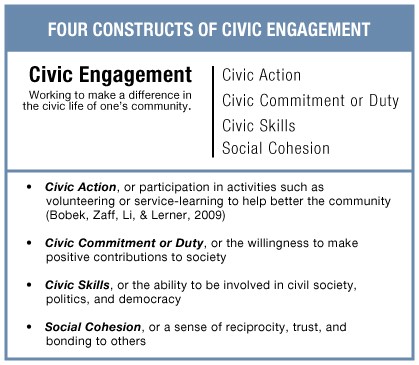
Volunteering is only one form of civic engagement included, as defined above, in the construct of civic action and civic commitment or duty, but research has also shown a connection between youth who volunteer and other forms of youth civic engagement. Findings suggest that “among youth, volunteering plays a valuable role in shaping how youth learn to interact with their community and develop the skills, values, and sense of empowerment necessary to become active citizens.”2
One possible form of civic action and civic commitment and duty is service-learning. According to the American Psychological Association,3 service-learning and civic engagement can be related but are not the same thing. Service-learning does not have to include a civic dimension and all forms of civic engagement are not service-learning. Civic engagement is a broader concept that may encompass, but is not limited to, service-learning. Service-learning differs from community service or volunteerism in two distinct ways:
- The service activity is integrated with academic curriculum and content.
- Students engage in reflection activities after their service experience and apply their learning in real-life activities.4
Resources
Helping Your Child Become a Responsible Citizen (PDF, 43 Pages)
This resource from the U.S. Department of Education provides information about the values and skills that contribute to character and good citizenship, including guidance on what parents can do to help their elementary-, middle-, and high school-aged children develop strong character.